





Damage from Typhoons
Typhoons can cause millions or even billions of dollars in damage.

Typhoons can cause millions or even billions of dollars in damage. Buildings slide down hillsides; valleys flood; villages disappear under landslides and mud slides; roads and bridges are washed away; crops become waterlogged, or are blown over or uprooted, or covered in mud. Destruction levels can be particularly high when a storm stalls and strong, driving rains persist for hours or even days, or when the storm slams into mountains, producing particularly large amounts of rain. Some typhoons are so powerful they blow plankton and small sea creatures into the sky, where they float around on clouds.
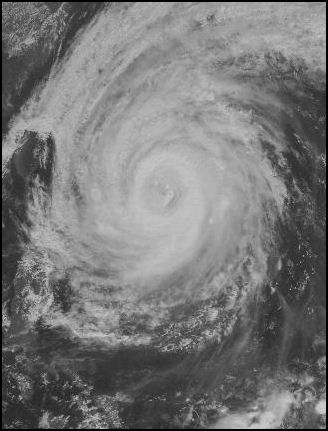
Usually much more damage and death is caused by rains than winds. People die from being hit by flying debris or falling trees or crushed in collapsed building but are more likely to die from drowning in flooded rivers or from suffocating under rain-induced mud slides and landslides. Most victims from really deadly storms die from storm surges---masses of ocean water that are pushed forward by the winds---that can penetrate several miles inland. The surges are particularly deadly if they occur at high tide.
Typhoons often do the most damage on low coral islands which are sometimes inundated with waves that can reach a height of 30 meters at sea and storm surges that sweep water across the entire island, annihilating every tree and hut in their path. Modern buildings and houses with cinder block walls and metal roofs are usually strong enough to withstand the winds of strong typhoons but thatched-roof huts and shanties are easily blown over or crushed by falling trees. Palm trees also blow over pretty easily because they don't have a deep root system.
Long term damage and hardships from typhoons are caused by sickness and starvation as water supplies become contaminated; cholera and dysentery; poisonous snakes flooded out of their dens; damaged crops and stored food; and the disruption or destruction of transportation routes used to bring in relief supplies. Over the longer term fields and agricultural land may be is destroyed and rivers may be rerouted. Where factories are washed away and infrastructure is damaged, people may begin migrating out. In poor countries there is inevitably not enough money to fix everything.
The danger from typhoons increases with time as coastal areas become more developed and urban areas sink as result of the drawing of underground water. Global warming is predicted to raise sea levels, making the situation even direr.
There are examples of typhoons and hurricanes striking certain areas and dramatically altering the coastline. Barrier island are particularly vulnerable, there are cases of such island that were formed thousands of years ago that have been whittled down to islets and remnants in 150 years by storms, subsiding land and rising sea levels.

